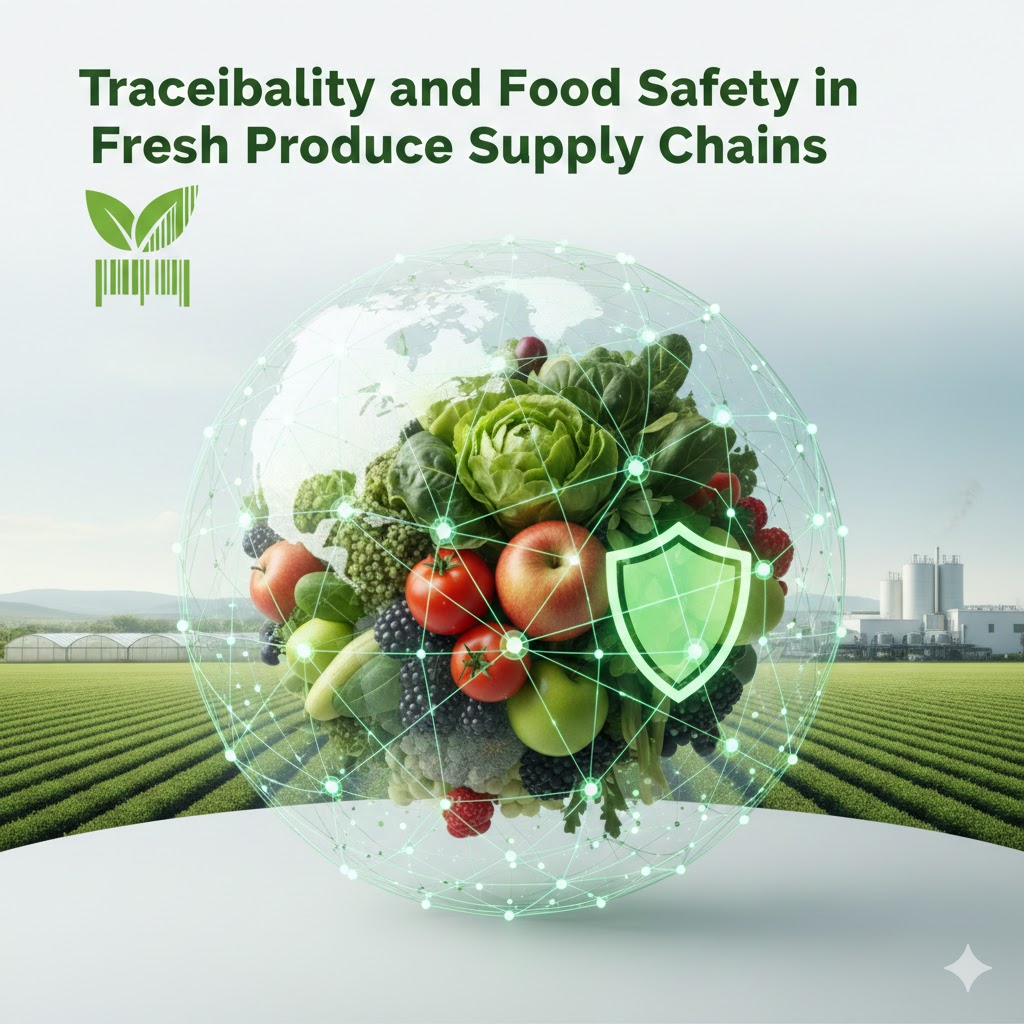

In an era of global supply networks and heightened consumer awareness, traceability and food safety have moved from optional extras to essential requirements. Exporters must demonstrate control over every stage of the supply chain and respond quickly to any contamination or recall. This article unpacks the concept of traceability, explores the role of regulations and technology, and illustrates how Nour Food EG builds trust through transparency.
Defining traceability
Traceability refers to the ability to follow the movement of food products through specified stages of production, processing and distribution. The International Fresh Produce Association explains that the Produce Traceability Initiative promotes forward and backward tracking to remove potentially unsafe products from the market swiftly. Effective traceability protects consumers, prevents outbreaks and reduces economic damage.
For exporters, traceability is not just about compliance – it is also a marketing advantage. Buyers increasingly demand assurance that their produce is free from contaminants and sourced responsibly. Suppliers who can provide such assurance secure better contracts and customer loyalty.
Regulatory frameworks
Many destination markets require traceability. The European Union’s General Food Law, for instance, mandates that food can be traced at all stages of production and distribution. National laws often go further, with supermarkets in Germany and the Netherlands imposing stricter residue limits and traceability documentation. Exporters must maintain batch records, harvest dates and packaging details to satisfy inspectors.
Compliance extends beyond Europe. Gulf countries, East Asian markets and North America each have different documentation requirements. Our compliance team keeps abreast of these changes and updates our systems accordingly. By preparing documents ahead of time and training staff, we avoid delays at borders and reduce the risk of rejection.
Technology tools
Modern technology makes traceability more accurate and efficient. We employ barcodes and QR codes on every carton, linking shipments to digital records of farm location, harvest date, variety and post‑harvest treatments. Scanning technology allows importers to access this information instantly, streamlining customs procedures and building trust.
In the future, blockchain may enable immutable, decentralised records that cannot be tampered with. Pilot projects in other sectors show promise, and Nour Food EG is exploring blockchain with research partners. Integrating sensors that log temperature and humidity along the journey can further enrich the data set, enabling predictive analytics for quality control.
Maintaining data integrity
Traceability data is only useful if it remains accurate and secure. We implement strict procedures for data entry and validation. Field officers are trained to record information immediately after harvest, and supervisors cross‑check entries. Data encryption and secure servers protect sensitive information.
We also maintain redundancy. Paper records back up digital logs, and multiple staff members verify key entries. During audits, we demonstrate our systems to certification bodies to prove that information cannot be altered retroactively.
Responding to incidents
Despite best efforts, contamination incidents can occur. A hallmark of effective traceability is the ability to respond quickly. When a problem arises, we use our lot codes to identify which shipments may be affected, notify buyers and recall goods if necessary. Because we maintain detailed records, we often limit recalls to specific batches rather than entire shipments, minimising waste and cost.
Transparent communication during incidents preserves trust. We alert regulatory authorities and issue public statements as required. After each incident, we review root causes and adjust practices to prevent recurrence.
Building consumer confidence
Consumers increasingly scan QR codes in supermarkets to learn about origin, variety and farming practices. We view this curiosity as an opportunity to showcase our sustainability efforts and the craftsmanship of our growers. Videos from fields, interviews with farmers and interactive infographics enrich the customer experience and turn traceability into a storytelling tool.
By positioning traceability at the centre of our brand, we differentiate Nour Food EG from generic produce suppliers. We invite customers to journey with us from seed to shelf, making them partners in our mission to deliver safe, delicious and responsibly grown food.
Case studies and future directions
The power of traceability becomes most evident when things go wrong. Consider a hypothetical scenario where a batch of cucumbers in a European supermarket is found to contain pathogens. Without proper traceability, all cucumbers from an exporting country might be pulled from shelves, inflicting severe economic damage on innocent growers. With detailed lot codes and digital records, however, investigators can pinpoint the affected farm, harvest date and even the portion of the field where contamination occurred. This targeted recall limits waste and restores consumer confidence swiftly. Nour Food EG conducts regular mock recall exercises to test our systems and identify gaps. In one drill, we traced cartons of citrus through multiple consolidators and cold stores across three countries in under four hours. The exercise revealed opportunities to improve data integration between partners, leading us to upgrade our software and standardise data formats.
Looking to the future, traceability will likely become more immersive and interactive. As blockchain technology matures, it offers the promise of decentralised, tamper‑proof ledgers that stakeholders can access with confidence. Consumers may scan a QR code and view a dynamic timeline of each product’s journey, complete with temperature graphs, photos of the farm and testimonials from growers. Integrating this information with social media could allow customers to share their appreciation and provide feedback directly to farmers, creating new channels of engagement. To prepare for this future, Nour Food EG participates in pilot projects with technology companies, testing blockchain solutions and evaluating consumer response. We also support regulatory harmonisation by sharing our experiences with standards bodies. By combining rigorous data practices with storytelling and innovation, we transform traceability from a compliance burden into a competitive advantage that elevates food safety and transparency across the industry.
Conclusion: Nour Food EG’s Commitment
Traceability and food safety form the backbone of consumer trust. Nour Food EG invests in robust data systems, cross‑checks and staff training to guarantee that every product we ship can be traced to its origin. Our customers expect nothing less than complete transparency, and we deliver it consistently. We view traceability not only as a compliance requirement but as a marketing advantage that differentiates us in competitive markets.
As technologies evolve, we will continue to integrate advanced tools such as blockchain, AI and real‑time sensors into our operations. At the same time, we remain committed to the human element of food safety: farmers who follow best practices, workers who maintain hygiene and managers who uphold standards. Together, these factors ensure that Nour Food EG remains a beacon of reliability and accountability. To learn more about our traceability programmes and how we protect your table, visit nourfoodeg.com.
Further Reading and Perspectives
For additional insight into traceability, numerous reports from the FDA, European Food Safety Authority and academic journals delve into data standards, consumer perceptions and technological innovation. Industry case studies on successful recalls illustrate the real‑world benefits of meticulous tracking systems. Nour Food EG encourages stakeholders to consult these resources to deepen their appreciation of traceability and its role in safeguarding public health.
Engaging in cross‑industry forums and pilot projects helps shape standards and keeps us ahead of evolving traceability expectations.
Continuous improvement in traceability processes ensures lasting confidence.
Sources
- IFPA explanation of produce traceability and benefits
- CBI note on stricter supermarket residue limits and documentation
Our Future Vision
As global trade continues to evolve, Nour Food EG remains steadfast in its commitment to delivering premium quality fresh produce while respecting the environment and the communities we serve. We invest in cutting‑edge research, collaborate with universities and innovation hubs, and share knowledge across our network to ensure that our operations stay ahead of industry standards. By embracing digital transformation, sustainable practices and social responsibility, we aim to set benchmarks that inspire our peers and reassure our customers that they are working with a trusted partner.
Our story is one of resilience and forward thinking. From humble beginnings to becoming a leader in Egyptian exports, we have always believed that transparency, integrity and excellence are the pillars of sustainable success. We look to the future with optimism, seeking to diversify our product range, expand into new markets and champion climate‑smart agriculture. Whether we are exploring renewable energy solutions for our cold chain, adopting biodegradable packaging or training the next generation of farmers, our mission remains the same: to nourish the world while nurturing our planet.