
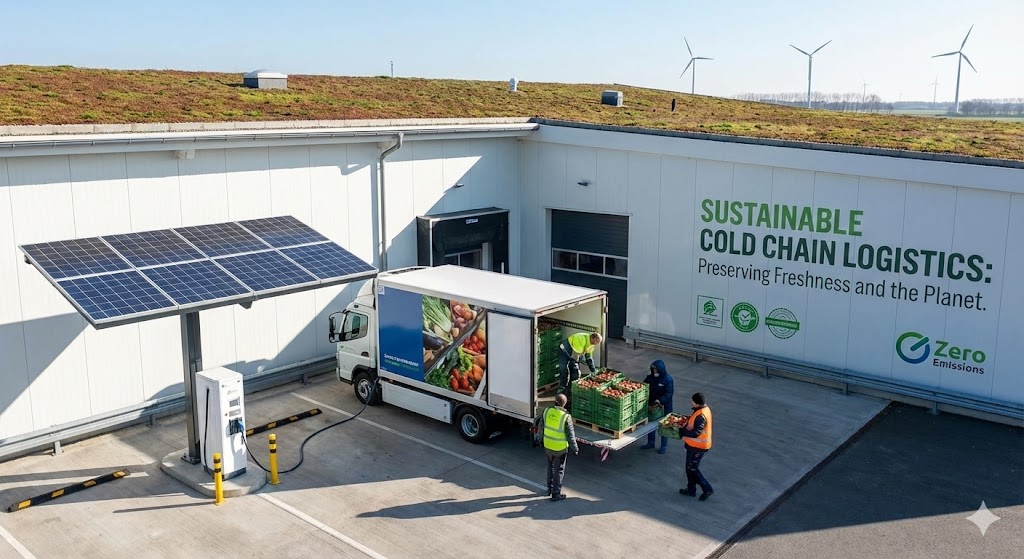


Fresh produce is highly perishable, and temperature abuse can devastate quality. To reach customers in perfect condition, exporters must master the art of cold chain logistics. This article delves into the science of refrigeration, the environmental impact of cold chains and the strategies Nour Food EG employs to deliver crisp apples, juicy grapes and tender beans across continents.
Why cold chains matter
Refrigeration slows respiration and microbial growth in fruits and vegetables. Without cooling, the metabolic processes that ripen produce continue unabated, leading to wilting, rot and nutrient loss. The UNEP/FAO estimates that roughly 14 % of food is lost before reaching consumers, with inadequate cold chains as a major factor. For exporters like us, every temperature excursion represents lost revenue and undermines trust.
Cold chain management is also a social justice issue. Post‑harvest losses reduce smallholder incomes by up to 15 %. By investing in cold storage, we help farmers earn more and reduce the overall footprint of our supply.
Environmental footprint of refrigeration
While cold chains preserve food, they also consume energy and contribute to greenhouse gas emissions. The same UNEP/FAO report notes that cold chains account for about 4 % of global greenhouse gas emissions, and global food loss contributes roughly 8 % of total emissions. The challenge is to maintain freshness without accelerating climate change.
Nour Food EG tackles this paradox by upgrading to energy‑efficient refrigeration units, adopting natural refrigerants with low global warming potential and optimising container loading to minimise fuel consumption. Renewable energy installations on farms and in packing facilities further cut the carbon footprint of our cold chain.
Designing an effective cold chain
Cold chain logistics require meticulous planning. Porter Logistics advises exporters to plan the entire journey from farm to retail and to select the right temperature zone for each product. For example, strawberries thrive at 0–2 °C, while bananas prefer 12–14 °C. Mixing incompatible items leads to condensation and spoilage.
We segment our cold chain into frozen, chilled and ambient zones. Each shipment is mapped in advance, with contingency plans for delays and emergencies. Close coordination with growers ensures produce is pre‑cooled before loading. Our teams use digital thermometers and temperature loggers to monitor conditions in real time and make adjustments when needed.
Reducing dwell time and handling risks
Time is the enemy of quality. The longer goods sit on a loading dock or under the sun, the higher the risk of temperature spikes. Porter Logistics stresses the importance of reducing dwell time and integrating cold chain partners as strategic collaborators. We enforce strict loading schedules and work with shipping lines that prioritise perishable cargo.
Our distribution centres are designed for quick turnarounds. We integrate customs documentation, phytosanitary inspections and palletisation into one workflow. This streamlined approach not only preserves quality but also reduces logistics costs and emissions.
Monitoring and continuous improvement
Technology enables continuous monitoring. Wireless sensors transmit temperature and humidity data to our control room throughout each journey. Should a fluctuation occur, alerts prompt immediate action. We also analyse historical data to identify weak points and improve processes.
Training is another pillar. Drivers, loaders and warehouse staff receive regular training on hygiene, handling and emergency procedures. By creating a culture of accountability, we ensure that every individual in the chain understands the stakes and maintains high standards.
The future of sustainable cold chains
The path forward will require innovation and collaboration. Governments and businesses are developing national cooling action plans and exploring alternative refrigerants to meet Montreal Protocol commitments. Nour Food EG participates in industry associations to advocate for supportive policies and share best practices.
We are experimenting with solar‑powered cold rooms, phase‑change materials and predictive analytics to further reduce waste. By staying at the leading edge of research and working closely with technology providers, we aim to build a cold chain that preserves nutrition, empowers farmers and respects the planet.
Broader impacts and next steps
Cold chains have implications that ripple far beyond individual shipments. In many developing countries, access to reliable refrigeration can unlock year‑round markets for farmers and reduce hunger by preventing spoilage. At the same time, refrigeration technologies are undergoing a revolution as researchers develop natural refrigerants with low global warming potential and explore solar‑powered systems that decouple cooling from fossil fuels. Nour Food EG monitors these advances closely, partnering with technology providers to pilot alternative refrigerants and hybrid energy solutions. We recognise that investing in greener equipment today will pay dividends tomorrow, both by reducing our carbon footprint and by ensuring compliance with tightening environmental regulations. Furthermore, we collaborate with industry peers and academic institutions to share data and best practices, believing that a collective approach accelerates progress for all stakeholders.
Looking ahead, national and international initiatives will play a pivotal role in transforming cold chains. Programmes such as national cooling action plans encourage governments to integrate food preservation into climate strategies and allocate resources for rural cold storage. Multilateral agreements like the Kigali Amendment under the Montreal Protocol push for the phase‑out of high‑GWP refrigerants and encourage adoption of cleaner technologies. On the ground, training programmes are essential to equip farmers, drivers and warehouse operators with the skills needed to manage sophisticated equipment. Nour Food EG invests in capacity building across our network, offering workshops and co‑financing vocational programmes. We also engage in policy dialogues to advocate for supportive infrastructure investments and incentives. By combining technological innovation with collaborative policy work and education, we aim to create a cold chain that not only delivers pristine produce but also contributes to sustainable development and climate resilience.
Conclusion: Nour Food EG’s Commitment
Sustainable cold chain logistics sit at the intersection of science, engineering and collaboration. At Nour Food EG we recognise that maintaining freshness is both an art and a responsibility. By investing in advanced refrigeration, renewable energy and rigorous monitoring, we ensure that every grape, citrus and green bean arrives with its nutrients intact and its taste unaltered. Our efforts protect not only our products but also the livelihoods of the farmers who grew them and the trust of consumers who enjoy them.
We cannot achieve these goals alone. That is why we partner with technology innovators, policymakers and fellow industry leaders to share knowledge and advocate for better infrastructure and regulations. Together, we can build cold chains that mitigate climate impact, reduce food loss and contribute to resilient food systems. We encourage readers to learn more about our cold chain initiatives and join us in championing freshness and sustainability at nourfoodeg.com.
Further Reading and Perspectives
To further explore the science of cold chain logistics, readers may consult texts on thermodynamics, post‑harvest physiology and supply chain management. Scholars have studied how respiration rates vary with temperature, how humidity affects quality and how packaging interacts with cooling efficiency. Industry reports on energy management and refrigerant transition provide insight into environmental impacts and cost considerations. Nour Food EG continuously reviews this literature to refine our practices. We invite partners to share their own research and collaborate on pilot projects that advance our collective understanding of sustainable cold chains.
By staying curious and engaged with the latest findings, we ensure that our cold chain systems evolve to meet the needs of farmers, retailers and consumers while respecting the planet’s limits.
Sources
- UNEP/FAO data on food loss and cold chain emissions
- UNEP/FAO note on global food loss contributions to greenhouse gas emissions
- Porter Logistics guidance on cold chain planning and monitoring
Our Future Vision
As global trade continues to evolve, Nour Food EG remains steadfast in its commitment to delivering premium quality fresh produce while respecting the environment and the communities we serve. We invest in cutting‑edge research, collaborate with universities and innovation hubs, and share knowledge across our network to ensure that our operations stay ahead of industry standards. By embracing digital transformation, sustainable practices and social responsibility, we aim to set benchmarks that inspire our peers and reassure our customers that they are working with a trusted partner.
Our story is one of resilience and forward thinking. From humble beginnings to becoming a leader in Egyptian exports, we have always believed that transparency, integrity and excellence are the pillars of sustainable success. We look to the future with optimism, seeking to diversify our product range, expand into new markets and champion climate‑smart agriculture. Whether we are exploring renewable energy solutions for our cold chain, adopting biodegradable packaging or training the next generation of farmers, our mission remains the same: to nourish the world while nurturing our planet.